African

The African Constituencies are requesting at least one additional voting seat on the Global Fund Board

The Global Fund has an inclusive governance system. However, it is it equitable? Can we save more lives with a better representation of Africa which, after all, receives more than 70% of Global Fund monies? The African Constituencies are requesting at least one additional voting seat on the Global Fund Board. The Board currently comprises…

Charting the Path Forward: Reflecting on The Future of Global Health Initiatives at the Wilton Park Dialogue

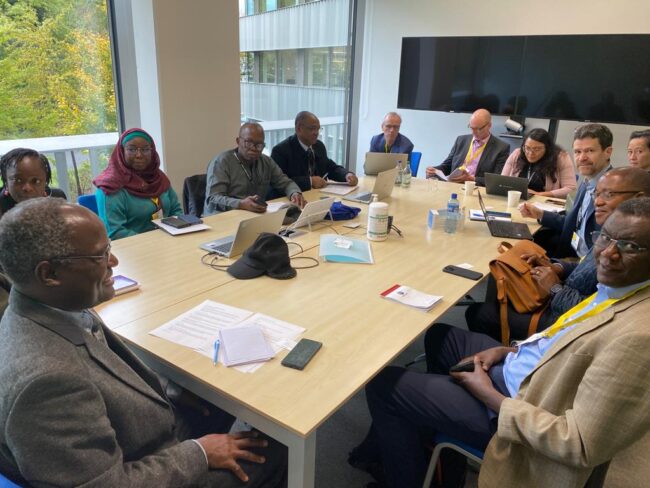
Over the past few decades, Global Health Initiatives (GHIs) have made significant contributions to remarkable advancements in safeguarding lives and enhancing the overall well-being of people worldwide. Their achievements include substantial progress in combating specific diseases such as polio, malaria, tuberculosis, and HIV/AIDS, as well as expanding the reach of targeted healthcare interventions like vaccination…

Africa Makes its Priorities Known at the 49th Global Fund Board Meeting

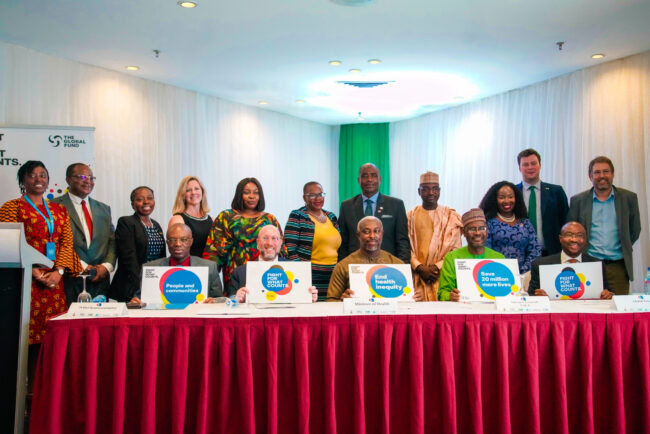
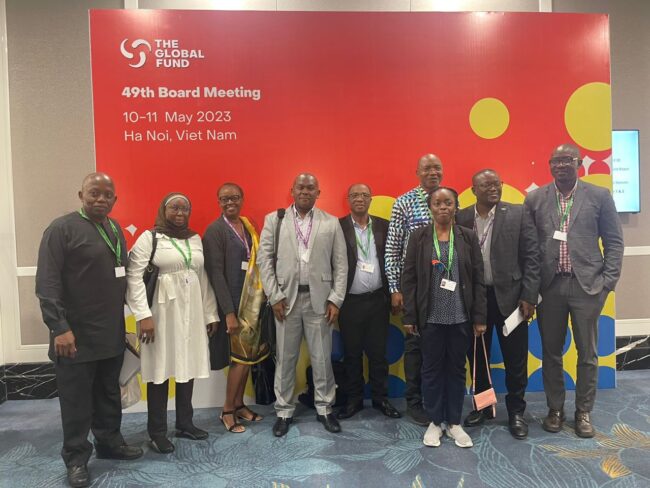
Twenty-one delegates from East and Southern Africa (ESA) and West and Central Africa (WCA) led by the African Constituency Bureau board chair, Dr. Jean Jacques Mbungani, attended the 49th Global Fund Board Meeting in Hanoi, Vietnam. Several pre-board sessions and bilaterals were held before the 10-11 May 2023 Global Fund board meeting. The Global Fund…

7th Global Fund Replenishment Story: Nigeria advocated for at least 30% increase on previous contribution by donor countries through their ambassadors to Nigeria

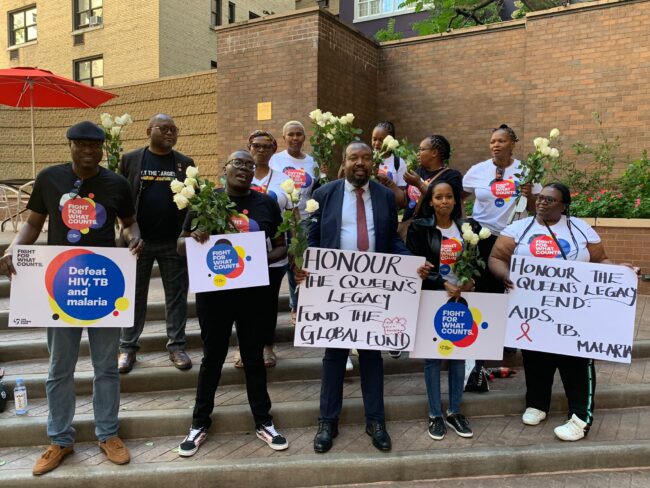
In an unprecedented show of solidarity, world leaders from developed and developing countries rallied round President Joe Biden of the United States of America to fight for what counts at the 7th Global Fund Replenishment Pledge Conference which held in New York on the 21st of September 2022. The headline news is that $14.25 billion…

7th Global Fund Replenishment Story: Malawi did a historical pledge

Malawi was selected to champion the 7th Global Replenishment process among other African countries after successfully implemented the Global funds grants in the last 20 years amounting to over US $1,2 Billion which have saved many lives .It was encouraging that Malawi President  HE Dr Lazalus Chakwera championed the 7th Global Replenishment process with support…

WCA and ESA constituencies approved the qualitative adjustment with comments : Discover why…

The Global Fund to fight HIV, TB and malaria invest in countries following a step-by-step process. It decides on the Global Disease Split using epidemiology and income category to obtain a formula-derived allocation per country. Then, the Global Fund conducts “qualitative adjustments”. What is the qualitative adjustment? Qualitative adjustments are refinements to formula-derived amounts (FDAs)…

Building Bonds to Overcome HIV/AIDS

In the 1990s, the disclosure of an HIV positive status was very often followed by a break in social and family bonds. The dreadful images surrounding the virus led to stigma, marginalization and discrimination of people living with HIV. While these people have gained greater acceptance in recent years, certain stigmatizing and discriminatory representations, perceptions…

A new HIV variant emerges

A new HIV variant, more virulent and contagious, has emerged. This variant, known as VB, causes an early onset of opportunistic diseases, however It could not spread owing to the effectiveness of prevention and ARV treatment programs implemented in the Netherlands where it is circulating.  A new variant of the human immunodeficiency virus (HIV) that…

“Unequal access to income and opportunity not only creates unfair, distorted and unhappy societies, it literally kills people.”

The fight against HIV, TB and malaria is very often focused on an exclusively hygienic, therapeutic or biomedical approach. This paper does not question the interest or the relevance of such an approach, but it suggests that we should resolutely broaden the scope of this fight to the borders of social inequalities. Actually, health as…

A commentary of The Global Fund Technical Evaluation Reference Group on primary HIV prevention efforts

Globally, new HIV infections declined by 44% between 2000 and 2021, missing the global target for a 75% reduction in new infections by 2020. The Global Fund Technical Evaluation Reference Group (TERG) published a thematic review on primary HIV prevention, in May 2021 to weigh in on discussions for the 2023-28 Global Fund Strategy. This…